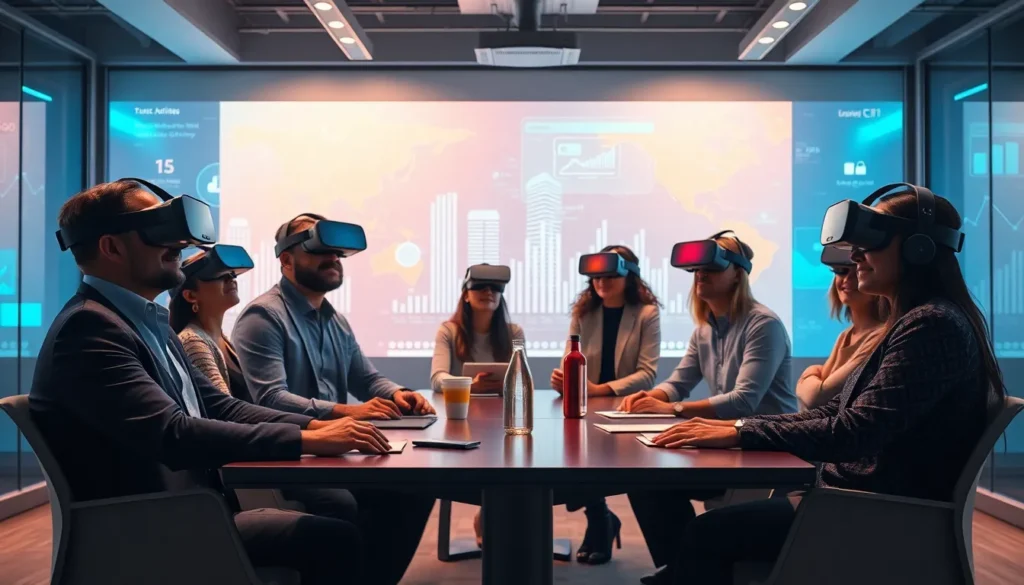
Virtual reality isn’t just for gamers anymore; it’s taken the business world by storm. From training employees to hosting virtual meetings, companies are discovering that VR can turn mundane tasks into immersive experiences. Imagine donning a headset and stepping into a lifelike simulation that feels more like a sci-fi movie than a conference room.
Overview of Commercial VR Uses
Virtual reality transforms numerous industries by providing interactive and immersive experiences. Businesses leverage VR for employee training, enhancing learning retention significantly. In sectors like healthcare, simulations enable practitioners to refine skills in controlled environments without risking patient safety. Manufacturing companies use VR to visualize complex assembly lines, allowing for efficient design and troubleshooting.
Marketing teams embrace VR for creating captivating advertisements and branded experiences. These immersive campaigns engage consumers, fostering brand loyalty and enhancing customer experience. Real estate agents utilize virtual tours, enabling clients to explore properties remotely, saving time and expanding market reach.
In the field of education, institutions implement VR for virtual classrooms and remote learning environments, making education more accessible. Museums and cultural institutions also adopt VR, allowing visitors to experience historical events and artifacts from their homes.
Retailers integrate VR into their shopping experiences, offering virtual fitting rooms and interactive product displays, enhancing online shopping convenience. Event planners incorporate VR for virtual events and exhibitions, enabling wider audience reach and engagement without geographical limitations.
Overall, commercial VR applications span across diverse sectors, demonstrating its capability to enhance productivity, engagement, and customer satisfaction. Each application illustrates the versatility and potential of virtual reality, marking a significant shift in how businesses operate.
Industries Utilizing Commercial VR
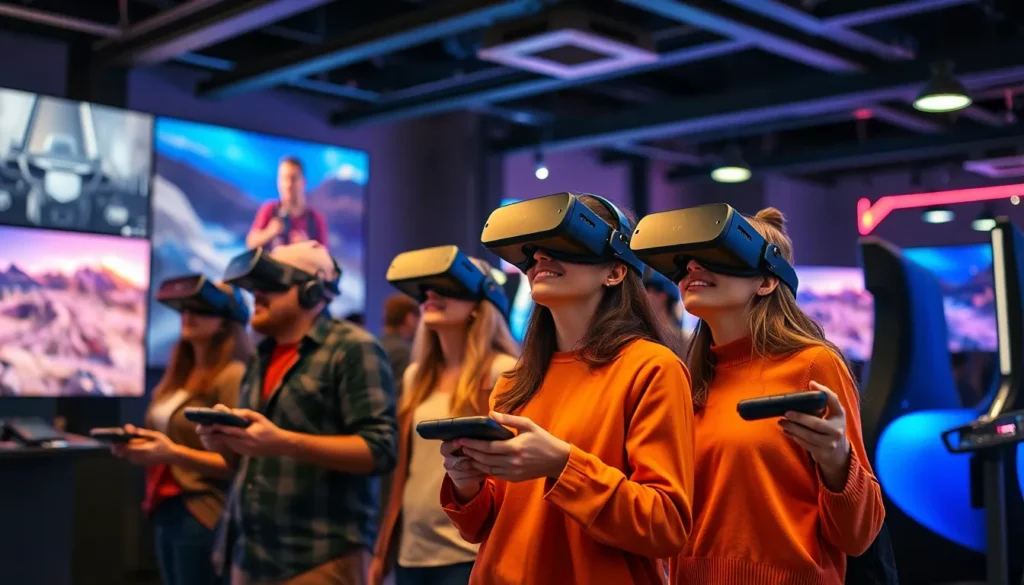
Virtual reality is revolutionizing multiple sectors, enhancing engagement and efficiency. Companies across industries harness VR technology to implement innovative solutions.
Entertainment and Gaming
Immersive experiences define the entertainment and gaming industries. Developers create realistic environments where players engage fully with their surroundings. A notable example includes VR arcades, which provide gamers with a unique, interactive experience. Popular titles like Beat Saber and Half-Life: Alyx showcase the endless possibilities of VR. Users often spend hours in these virtual worlds, highlighting their allure and potential for increased user retention.
Real Estate and Architecture
Real estate and architecture benefit significantly from VR. Property agents offer virtual tours, allowing potential buyers to explore homes remotely. Clients can visualize spaces without visiting, streamlining the buying process. Architectural firms utilize VR for walkthroughs of design concepts, enabling better client feedback. By presenting projects in immersive formats, stakeholders gain a clearer understanding of designs. This technology contributes to informed decisions, enhancing satisfaction and reducing project revisions.
Education and Training
In education and training, VR transforms traditional methodologies. Schools and universities implement virtual classrooms, creating interactive learning environments. Students access simulations that enhance understanding of complex subjects. Companies utilize VR for employee training, offering realistic scenarios that boost skill retention. For instance, medical professionals practice surgeries in virtual settings, minimizing risks associated with real-life training. Engagement levels increase, ensuring learners remain invested in their educational journey.
Benefits of Commercial VR
Virtual reality (VR) offers numerous benefits for businesses, enhancing experiences and improving operational efficiency across various sectors.
Enhanced User Experience
Enhanced user experience stands out as a primary advantage of commercial VR. Businesses create immersive environments that engage users more effectively than traditional methods. For example, real estate agents provide virtual tours, allowing potential buyers to explore properties from anywhere. Additionally, marketing teams utilize VR for interactive advertisements, which capture attention and foster emotional connections. Engaging users transforms passive consumption into active participation, increasing brand loyalty. Organizations also implement VR in training programs, providing realistic simulations that enhance skill retention. This engaging approach ultimately leads to greater satisfaction for both employees and customers.
Cost Efficiency
Cost efficiency emerges as another key benefit of commercial VR. Implementing VR technology reduces expenses related to travel and physical resources. For instance, companies conducting virtual meetings save on travel costs while maximizing employee time. Additionally, training simulations eliminate the need for expensive physical setups. Businesses can replicate complex scenarios without the associated costs of materials or safety measures. Maintenance and design processes also see reductions in costs and time with VR simulations, accelerating project timelines. This efficiency allows organizations to allocate financial resources more effectively, driving overall profitability and productivity.
Challenges in Implementing Commercial VR
Implementing commercial VR presents several challenges that can hinder its adoption and effectiveness in various industries.
Technological Limitations
Technological limitations represent a significant barrier for many businesses. Existing hardware often lacks the processing power required for seamless experiences. Performance issues can lead to motion sickness or discomfort among users, diminishing engagement. In addition, compatibility problems can arise between different systems, creating inconsistent user experiences. High costs associated with VR equipment further complicate the situation, as small businesses may struggle with investments. Software solutions need to evolve to provide intuitive interfaces that suit diverse user needs. Organizations must confront these hurdles to harness VR’s full potential effectively.
User Adoption Issues
User adoption issues pose another challenge for commercial VR. Many individuals express resistance towards new technologies due to concerns about usability and the learning curve associated with VR tools. Familiarity with traditional methods often results in reluctance to embrace immersive solutions. Training staff becomes essential for effective integration; without proper instruction, users may feel overwhelmed by VR systems. Furthermore, data privacy concerns can create skepticism, as individuals worry about how their information will be handled in virtual environments. Addressing these adoption barriers is crucial for maximizing the benefits of VR in the workplace.
Future Trends in Commercial VR
Innovations in virtual reality (VR) technology are paving the way for enhanced commercial applications. Expect advancements in hardware to enable more realistic experiences, significantly improving immersion and user interaction. As devices become lighter and more affordable, businesses in various sectors will embrace VR more readily.
Emerging applications in industries such as construction and real estate showcase potential for improved project visualization. Architects and construction managers can use VR to simulate building designs, providing clients with realistic walkthroughs before any physical work begins. This trend enhances collaboration and accelerates decision-making processes.
Additionally, marketing strategies are shifting towards experiential advertising. Companies are crafting immersive campaigns that captivate consumers, making products more appealing through engaging virtual experiences. This shift fosters deeper emotional connections between brands and their audiences.
In healthcare, VR training simulations continue to evolve, offering medical professionals opportunities for practice without risk. Technology allows for realistic scenarios that improve skill acquisition, enhancing patient care. More healthcare institutions will prioritize these training methods as they demonstrate efficacy.
In education, the trend toward personalized learning experiences is gaining momentum. Institutions can tailor VR content to individual learning styles, increasing educational engagement. Students benefit from interactive lessons, reinforcing knowledge retention through immersive participation.
Sustainability initiatives also enter the VR landscape. Companies are utilizing virtual simulations to analyze environmental impacts and optimize resource management. This trend supports corporate responsibility while enhancing operational efficiency.
Enhanced data analytics within VR applications are becoming crucial. By tracking user behavior, businesses gain insights that inform strategic decisions. As data-driven strategies become more prevalent, VR serves as a valuable tool for understanding market dynamics.
The evolution of commercial VR is reshaping how businesses engage with employees and customers alike. Its applications span various industries from training and marketing to real estate and healthcare. By creating immersive experiences, VR not only enhances user engagement but also improves cost efficiency.
As technology advances, the potential for VR to transform business operations continues to grow. Companies that embrace these innovations can expect to see increased productivity and deeper connections with their audiences. Overcoming the challenges of implementation will be crucial for unlocking the full benefits of virtual reality in the commercial landscape.