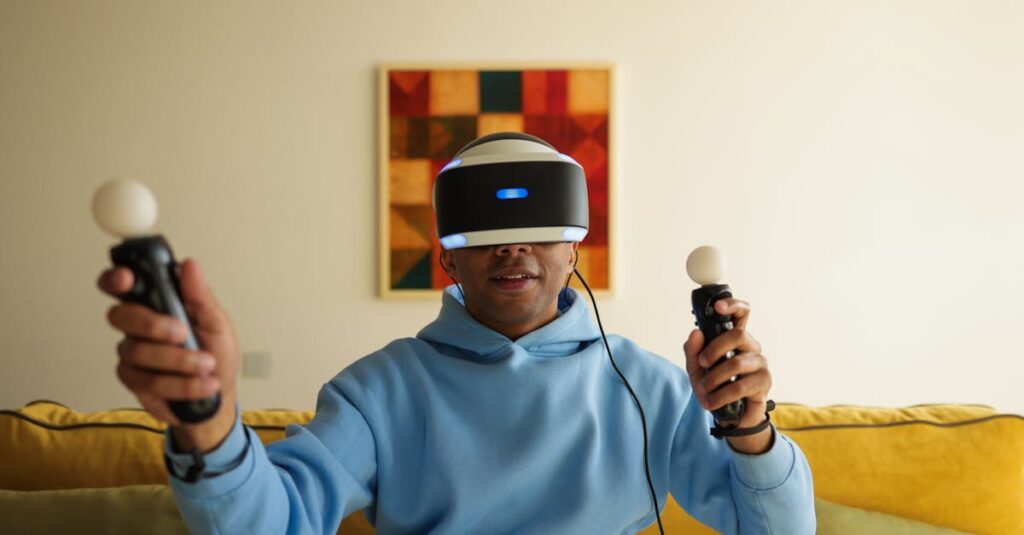
Imagine slipping on a headset and being transported to a world where dragons roam and adventures await. Virtual reality game systems are not just gadgets; they’re gateways to experiences that make reality seem a bit too bland. Whether it’s dodging laser beams in a futuristic city or solving mysteries in a haunted mansion, these systems offer an escape that’s as thrilling as it is immersive.
But it’s not all about slaying monsters and racing cars. Virtual reality is revolutionizing how players connect, learn, and even socialize. With endless possibilities at their fingertips, gamers are diving into new realms, leaving their living rooms behind—at least until snack time. Get ready to explore the exciting universe of virtual reality game systems, where the only limit is your imagination and maybe your Wi-Fi connection.
Table of Contents
ToggleOverview of Virtual Reality Game Systems
Virtual reality game systems immerse players in interactive environments, enhancing gameplay with lifelike visuals and sound. These systems typically include headsets, motion controllers, and sometimes additional accessories that track user movements. Various platforms exist, such as PC-based systems, standalone devices, and console-integrated hardware, each offering distinct experiences.
Leading brands, including Oculus, HTC, and PlayStation, produce devices that cater to different audiences. Oculus Quest 2, for example, is a standalone headset that eliminates the need for external sensors, making it accessible for casual gamers. Other systems like the Valve Index provide high-fidelity experiences with precise tracking capabilities suited for more dedicated players.
Many virtual reality game systems feature a wide array of genres, encompassing action, adventure, puzzle, and simulation games. Players can engage with titles like “Beat Saber” for rhythm challenges or “Half-Life: Alyx” for immersive storytelling experiences. These games leverage the technology to create unique thrills that traditional gaming cannot replicate.
Connectivity is crucial in virtual reality, allowing players to socialize and compete with others online. Services like SteamVR facilitate community interactions, enabling users to play together or share experiences regardless of their geographical locations.
As technology advances, improvements in graphics, processing power, and accessibility continue to reshape virtual reality. Innovations like eye tracking and haptic feedback enhance realism, making environments more engaging and responsive. Players now witness an unfolding future brimming with potential for innovation and creativity in gameplay.
Key Features of Virtual Reality Game Systems
Virtual reality game systems offer a range of features that elevate gaming experiences beyond traditional platforms. These components work together to create engaging and immersive environments.
Immersion and Interactivity
Immersion defines the essence of virtual reality gaming. Players enter realistic environments, interacting seamlessly with virtual worlds. Controllers often feature motion tracking, allowing physical movements to translate into the game, enhancing interactivity. Multiplayer functionalities enable friends to connect, communicate, and build relationships within these immersive spaces. Developers continually innovate gameplay mechanics that foster deeper connections, ensuring each experience feels unique. With social interactions at the forefront, virtual reality gaming forges stronger bonds among players.
Graphics and Audio Quality
Graphics quality significantly impacts player experience in virtual reality games. High-resolution visuals provide stunning realism, bringing environments and characters to life. Advanced rendering techniques facilitate detailed textures and lifelike animations. Equally important, audio quality enhances immersion through spatial sound design. Surround sound systems allow players to pinpoint in-game actions accurately, creating a fully engaging experience. Leading brands invest in cutting-edge technology to deliver visual and auditory elements that captivate players. This focus on graphics and sound sets virtual reality apart from traditional gaming, highlighting its potential for transformative gameplay.
Popular Virtual Reality Game Systems
Virtual reality game systems provide thrilling experiences through innovative technology. Here are some of the most popular options available today.
Oculus Quest
Oculus Quest is a standalone headset known for its accessibility and user-friendly interface. This device features a wireless design, allowing freedom of movement during gameplay. With a vast library of games like “Beat Saber” and “Superhot VR,” users enjoy diverse experiences without the need for a powerful gaming PC. The headset supports hand tracking, enhancing immersion while minimizing setup time. Oculus continually updates its software, improving performance and expanding the available content for its users.
PlayStation VR
PlayStation VR offers an immersive experience for console gamers. It connects to the PlayStation 4 and PlayStation 5, providing access to exclusive titles like “Astro Bot Rescue Mission” and “Resident Evil 7.” The system’s headset features high-resolution visuals and 3D audio, enhancing the uncanny realism of virtual environments. With PlayStation’s existing ecosystem, users can explore exciting virtual worlds seamlessly. Additionally, the upcoming PlayStation VR2 is set to elevate the experience with improved graphics and innovative features, building excitement among VR enthusiasts.
HTC Vive
HTC Vive is recognized for its premium experiences in virtual reality gaming. This PC-based system features high-resolution displays and advanced tracking technology through external sensors. Gamers engage deeply with titles such as “Half-Life: Alyx” and “The Walking Dead: Saints & Sinners,” which leverage its capabilities. Vive’s modular accessories enhance customization, catering to diverse gaming preferences. Regular updates and new hardware ensure that HTC Vive remains a top choice for serious gamers seeking cutting-edge experiences in virtual reality.
Benefits of Using a Virtual Reality Game System
Virtual reality game systems offer several advantages that elevate the gaming experience beyond traditional platforms.
Enhanced Gaming Experience
Immersive gameplay transports players into dynamic worlds. Enhanced graphics and realistic sound create environments that feel tangible. Motion-tracking controllers enable seamless interactions, allowing players to engage directly with their surroundings. Furthermore, developers focus on diverse genres, ensuring something for everyone. Titles such as “Beat Saber” and “Half-Life: Alyx” exemplify captivating gameplay that keeps players coming back. Players benefit from consistently evolving technology, which continues to push boundaries and improve performance in virtual reality.
Social Interaction Opportunities
Social connections thrive in virtual reality environments. Multiplayer functionalities encourage collaboration and competition, enriching the overall gaming experience. Platforms like SteamVR allow players to connect, creating communities centered around shared interests. Online events and tournaments foster a sense of belonging among users. Friends can team up or compete in thrilling scenarios while communicating in real-time. Engaging with others enhances not only the joy of gaming but also creates lasting relationships built on shared experiences.
Challenges and Considerations
Virtual reality game systems present several challenges and considerations that users must navigate.
Cost and Accessibility
Investment in virtual reality sets can be substantial. Prices for headsets like the Oculus Quest start around $299, while premium options like the Valve Index exceed $999. Accessibility extends beyond cost; users require compatible hardware for a seamless experience. High-performance PCs become essential for demanding titles. Additionally, the learning curve associated with setup and navigation can deter newcomers. Game libraries vary among platforms as well, impacting user choices. Inclusive design in software becomes necessary, ensuring diverse players can enjoy these experiences.
Motion Sickness and Health Concerns
Motion sickness ranks among the common issues faced by users. Discrepancies between visual input and physical movement often lead to discomfort during gameplay. Symptoms can manifest as nausea, dizziness, and headaches. Duration of playtime also influences these effects; shorter sessions may mitigate discomfort. Developers are focusing on solutions such as comfort settings and adjustable movement speeds to reduce this impact. Other health concerns include eye strain due to prolonged headset use. Users should take regular breaks to address fatigue and maintain well-being while immersed in virtual environments.
Virtual reality game systems are reshaping the landscape of gaming and social interaction. Their ability to immerse players in lifelike environments fosters not only individual enjoyment but also community engagement. As technology continues to advance, the experiences offered by these systems will only become more captivating and accessible.
While challenges such as cost and health concerns exist, ongoing innovations and improvements promise to enhance user comfort and enjoyment. With a diverse range of genres and platforms available, there’s something for everyone in the virtual reality realm. Embracing this technology opens the door to a new world of gaming possibilities, inviting players to explore and connect like never before.