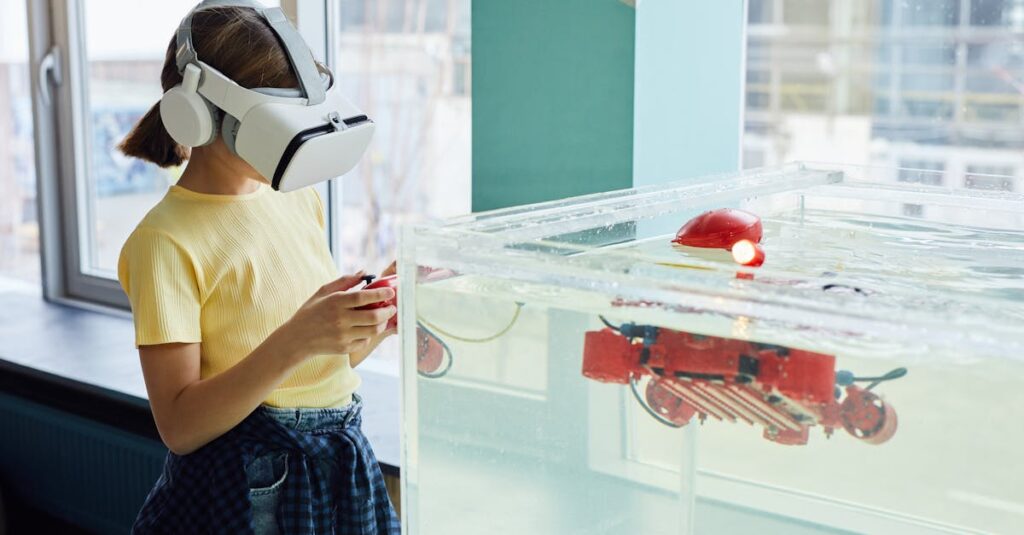
In a world where reality sometimes feels a bit too… real, virtual reality game development swoops in like a superhero in spandex. Imagine crafting immersive experiences that transport players from their living rooms to enchanted forests or intergalactic battles. It’s not just about pixels and code; it’s about creating alternate realities that make players forget their laundry is piling up.
Table of Contents
ToggleOverview of Virtual Reality Game Development
Virtual reality game development involves a blend of creative storytelling and technical innovation. Developers utilize advanced tools to design environments that immerse players completely. Graphic engines like Unity and Unreal Engine play crucial roles in bringing these virtual worlds to life.
Coding languages, including C# and C++, are essential for programming gameplay mechanics. This process encourages seamless interactions between players and their surroundings. Sound design also contributes significantly, enhancing the immersiveness of the experience.
User interfaces in virtual reality require unique considerations compared to traditional gaming. They must facilitate intuitive navigation and reduce motion sickness. Implementing user feedback during design iterates the project, ensuring the final product meets player expectations.
Testing in virtual reality is multifaceted. Developers must assess gameplay mechanics, graphics quality, and user experience in various conditions. Such rigorous testing helps identify issues that could disrupt immersion.
Collaborating across disciplines enriches virtual reality game development. Artists, designers, and programmers work closely to ensure cohesion in visuals, gameplay, and audio. This teamwork fosters creativity and results in more compelling experiences.
Emerging technologies, including haptic feedback and eye tracking, expand possibilities in the field. These advancements allow players to interact with environments in novel ways. Virtual reality continues to evolve, pushing the boundaries of what is possible in gaming.
Learning resources are abundant for aspiring developers. Online courses, tutorials, and community forums provide valuable knowledge and support. Engaging with these materials can accelerate skills in virtual reality game development.
Key Technologies in Virtual Reality Game Development
Understanding the critical technologies that drive virtual reality game development enhances the creation of immersive experiences. These technologies include game engines and virtual reality hardware.
Game Engines
Unity and Unreal Engine stand out as the most popular game engines for virtual reality development. These platforms provide essential tools for creating visually stunning 3D worlds. Unity offers a user-friendly interface and extensive asset store, making it accessible for developers of all skill levels. Unreal Engine, known for its high-quality graphics capabilities, appeals to teams aiming for realistic visuals. Both engines support multiple platforms, allowing developers to reach a larger audience. Integrating features like physics simulations and real-time rendering enhances gameplay experience and realism. Behind every successful VR game, effective use of these game engines proves vital.
Virtual Reality Hardware
Virtual reality hardware serves as the backbone of immersive experiences. Headsets like Oculus Rift and HTC Vive deliver high-quality visuals and audio, essential for player engagement. Motion controllers allow for intuitive interaction within virtual spaces, enhancing user experience. Additionally, haptic feedback devices provide tactile sensations, boosting realism during gameplay. Graphics cards play a crucial role, as they handle rendering complex environments smoothly. Tracking systems, such as external sensors and inside-out tracking technologies, improve movement accuracy and responsiveness. Emphasizing the importance of compatible hardware ensures a seamless virtual experience that captures players’ attention.
Designing Immersive Experiences
Designing immersive experiences in virtual reality requires a careful balance of creativity and technical skill. Developers strive to create environments that fully engage players, allowing them to feel as though they are part of the action.
User Interface Design
User interface design in virtual reality focuses on creating intuitive and accessible navigation. It relies on visual elements that remain clear despite the three-dimensional space. Effective UI design incorporates spatial awareness, ensuring that menus and controls are easily visible without obstructing gameplay. Developers frequently test UI layouts with real users, refining them based on feedback to minimize confusion and improve usability. Accessibility stands as a priority, as it helps accommodate players with differing abilities. Elements should not cause discomfort or motion sickness, emphasizing the importance of well-considered design choices.
Interaction Mechanics
Interaction mechanics play a critical role in how players experience virtual reality. Engaging interactions create a seamless connection between the player and the virtual environment. Developers implement natural gestures and movements to simulate real-life actions, enhancing immersion. Feedback systems, such as haptic responses, provide physical sensations that reinforce player actions. Collaboration between designers and programmers ensures that these mechanics feel satisfying and responsive. Additionally, robust testing under various scenarios verifies that interactions function smoothly, maintaining the flow of gameplay and encouraging exploration and engagement.
The Development Process
The development process of virtual reality games is a multi-faceted journey, integrating creativity with technology. It divides into three main phases: pre-production, production, and post-production.
Pre-Production
Pre-production serves as the foundation for a successful virtual reality game. During this phase, teams focus on brainstorming ideas, defining gameplay mechanics, and developing the game’s narrative. Concept art emerges, setting the visual tone. Collaborating early amongst artists and writers ensures a cohesive vision. Additionally, creating prototypes gives insight into gameplay feasibility and player engagement. Planning resources and timelines helps keep the project on track for subsequent stages.
Production
Production is where ideas transform into reality. Teams immerse themselves in designing 3D environments and coding interactions using tools like Unity or Unreal Engine. Sound design plays a pivotal role, enhancing immersion through audio effects and background music. Testing gameplay continuously throughout this phase allows for immediate feedback and adjustments. Close collaboration among artists, programmers, and designers maintains a unified approach. Regular meetings ensure issues are addressed swiftly, fostering a dynamic and adaptable workflow.
Post-Production
Post-production focuses on refining the game before its release. This stage involves rigorous testing to identify bugs and ensure a smooth player experience. Polishing graphics and audio elements enhances overall quality. Marketing strategies also get developed, positioning the game for launch. Gathering feedback from beta testers provides valuable insights into player preferences. Additionally, teams prepare to support the game post-launch with updates and patches, ensuring longevity in a competitive market.
Challenges in Virtual Reality Game Development
Developers face numerous challenges in virtual reality game development that can affect the overall experience. Creating content for diverse hardware, such as Oculus Rift and HTC Vive, demands adaptability to different performance specifications and user interactions. High expectations for immersive graphics require skills in optimization techniques to avoid lag or frame drops, which can diminish user engagement.
User experience poses a significant hurdle as well. Balancing realistic graphics with comfortable gameplay is essential, especially since motion sickness can occur for some players. Developers must implement intuitive controls that cater to various user preferences, ensuring an enjoyable and engaging environment for everyone.
Collaboration among team members, including designers and programmers, presents its own complexities. Synchronizing different perspectives and skills is key, yet miscommunication can lead to discrepancies in design and functionality. Coordinating tasks ensures that everyone remains on the same page and that the final product aligns with the original vision.
Testing is another critical element, demanding rigorous quality assurance processes to identify and address bugs. Early and continuous testing helps verify gameplay mechanics, allowing teams to optimize user experiences consistently.
Emerging technologies introduce both excitement and challenges. Innovations like haptic feedback and eye tracking can enhance player interactions, but integrating these technologies into existing frameworks often requires additional resources and expertise. Overall, navigating these challenges shapes the development journey and influences the final gaming experience.
Future Trends in Virtual Reality Game Development
Emerging technologies continue to shape the future of virtual reality game development. Advances in artificial intelligence enhance gaming experiences by enabling smarter non-player characters. Personalized gameplay using AI algorithms adapts to player behavior, resulting in immersive narratives that feel uniquely tailored.
Moreover, cloud gaming is gaining traction, allowing players to experience VR games without high-end hardware. This shift broadens access, making VR more inclusive and appealing to a wider audience. With reliable internet connections, users can enjoy high-quality graphics and performances directly from their devices.
Augmented reality integration in virtual reality games provides players with deeper engagement. For example, blending real-world elements with virtual environments fosters a sense of presence. Developing hybrid experiences encourages exploration beyond traditional gameplay mechanics.
In terms of hardware, next-generation headsets with improved field of view and resolution enhance visual fidelity. These innovations contribute to an overall more captivating experience, making environments feel more lifelike. Wireless technology also reduces physical constraints, allowing players to move freely within their virtual worlds.
Additionally, social interaction in virtual reality continues to evolve, with multiplayer experiences prioritizing community engagement. Developers recognize the importance of creating shared spaces, facilitating collaboration and competition among users. Enhanced avatars and personalized customization options foster connections between players, enriching the overall gameplay experience.
Lastly, sustainability is becoming a significant focus in virtual reality game development. Developers are increasingly considering eco-friendly practices in their production processes. Awareness of environmental impact motivates the industry to adopt practices that are both innovative and responsible.
Virtual reality game development stands at the forefront of innovation in the gaming industry. As technology evolves developers are equipped with new tools and techniques that push the boundaries of immersive experiences. The blend of creativity and technical expertise is vital in crafting engaging worlds that captivate players.
Emerging trends like artificial intelligence and cloud gaming promise to reshape how games are experienced. With advancements in hardware and a growing focus on sustainability the future of virtual reality gaming looks bright. As developers continue to collaborate and push their creative limits the possibilities for virtual reality will only expand.