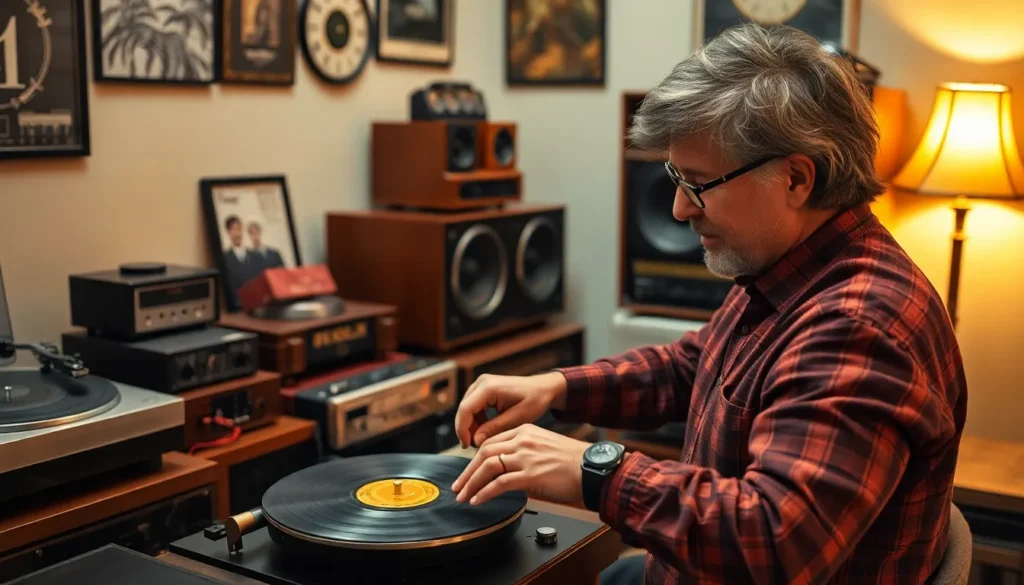
In a world dominated by sleek digital sound, vintage audio equipment stands out like a classic vinyl record in a sea of streaming playlists. There’s something undeniably magical about the warm tones of a tube amplifier or the crackle of an old record player. It’s like stepping into a time machine where every note tells a story and every scratch adds character.
Understanding Vintage Audio
Vintage audio refers to older sound equipment that produces distinct sound qualities and nostalgic experiences. Enthusiasts appreciate these items for their craftsmanship and unique sonic characteristics.
Definition and Characteristics
Vintage audio encompasses devices manufactured primarily before the 1980s. Collectors often seek items like tube amplifiers, vinyl record players, and reel-to-reel tape decks. Each device features distinct mechanisms that contribute to warmer sound reproduction. High-quality materials, such as wood and metal, characterize many vintage components, enhancing durability and aesthetics. Users often describe the sound as richer, with certain imperfections that provide charm.
Importance in Audio Culture
Vintage audio plays a vital role in music history and sound engineering. Many audiophiles celebrate analog equipment for its authentic sound reproduction. Cultural movements often center around vinyl records that foster community through shared listening experiences. Events highlighting vintage audio culture attract enthusiasts who seek to connect with the past. The popularity of vintage gear emphasizes the growing desire for tangible, immersive experiences over digital convenience.
Popular Vintage Audio Equipment
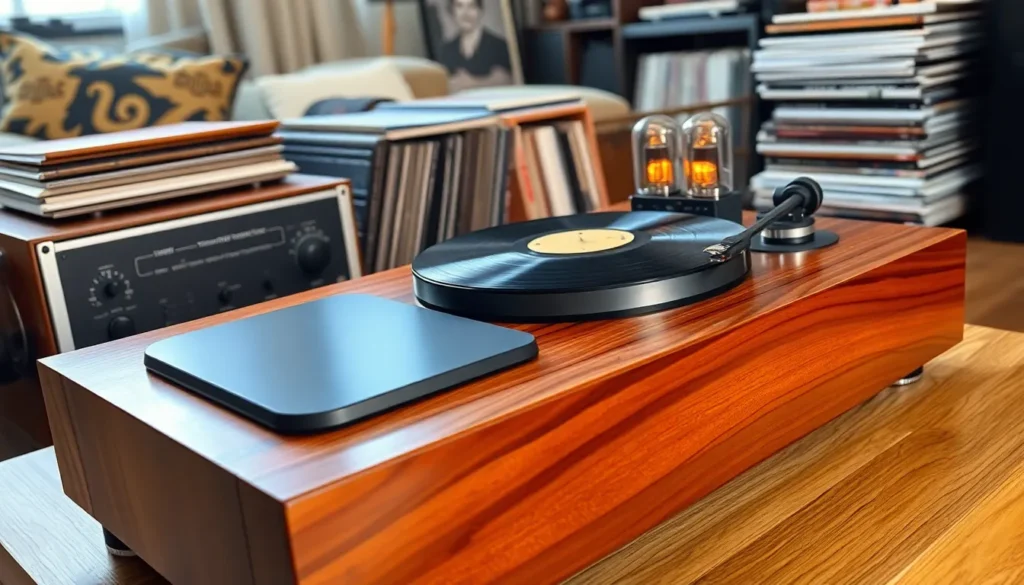
Vintage audio equipment captures unique sound qualities and evokes a sense of nostalgia. The allure lies in the craftsmanship and authentic audio experience they provide.
Turntables
Turntables serve as the cornerstone of vintage audio systems. They play vinyl records, offering a rich sound that many modern devices can’t replicate. Models from brands like Technics and Garrard are particularly sought after due to their durability and performance. Collectors often look for direct-drive systems, which provide better speed stability and less wow and flutter. Features like adjustable tonearms enhance playback quality, allowing users to experience music as originally intended. Maintenance matters, with proper care ensuring longevity and optimal sound reproduction.
Amplifiers
Amplifiers amplify the audio signals that turntables produce. Tube amplifiers, in particular, are favored for their warm sound and natural compression. They often use high-quality materials like transformers and tubes, which contribute to a fuller, richer sound. Brands such as McIntosh and Marantz offer iconic models that enthusiasts cherish for their design and performance. Solid-state amplifiers also appeal to users who appreciate their reliability and less frequent maintenance requirements. Matching amplifiers with appropriate speakers enhances overall audio fidelity.
Speakers
Speakers play a crucial role in transforming electrical signals into audible sound. Vintage models often utilize wood enclosures, which improve resonance and tonal qualities. Brands such as Klipsch and JBL are renowned for their exceptional sound reproduction, attracting dedicated collectors. Bookshelf speakers and floor-standing designs offer varied listening experiences, catering to different preferences and room sizes. Fairly high sensitivity ratings allow speakers to produce louder sounds with less power. Restoration and upkeep of vintage speakers maintain their stellar performance, ensuring they continue to deliver rich audio experiences.
The Rise of Vintage Audio
The resurgence of vintage audio equipment reflects a growing appreciation for its unique sound and craftsmanship. Nostalgia plays a crucial role in this trend, drawing enthusiasts to the charm of older devices.
Historical Context
Vintage audio equipment originated in the early 20th century, with the rise of radio and phonographs. Acoustic recordings transitioned to electric technologies in the 1920s, leading to the creation of vibrant sounds that captivated audiences. By the mid-century, brands like RCA and Crystal complemented household music experiences. The production boom during the 1950s and 1960s established legendary models that enthusiasts cherish today. This foundational era shaped sound engineering and influenced modern devices, leaving a lasting legacy. Music lovers often seek out these iconic pieces as a connection to the past, reliving the evolution of audio technology through their collections.
Technological Advancements
Vintage audio technology revolutionized sound experiences. The introduction of tube amplifiers in the 1940s prioritized warmth and depth that contemporary digital systems often lack. Innovations in speaker design, particularly the use of wood enclosures, enhanced resonance and provided richer listening experiences. Turntables became cornerstones of audio systems during the 1970s, highlighting craftsmanship and meticulous engineering. Brands like Technics and Dual set standards during this transformative period. Recent interest in restoring and maintaining vintage equipment signals a recognition of these advancements’ significance, as enthusiasts continue to prioritize the quality of analog sound over digital convenience.
Collecting Vintage Audio
Collecting vintage audio equipment offers a rewarding journey into sound history. Individuals savor the uniqueness and craftsmanship of items produced before the 1980s.
Tips for Beginners
Start by researching brands and models known for quality, like Technics and McIntosh. Attend local vintage audio shows to connect with enthusiasts and gain insights. Explore online forums to ask questions and share experiences. Prioritize budget when determining which items to collect, as prices can vary significantly. Focus on starting with turntables or speakers for a balanced system.
Maintenance and Care
Regular cleaning keeps vintage equipment in optimal condition. Use a soft brush to remove dust from turntables and speakers. Inspect all connections to ensure they function properly. Store items in a climate-controlled environment to avoid damage from humidity. Consider having amplifiers serviced by professionals to maintain sound quality.
Modern Revival of Vintage Audio
Vintage audio equipment is enjoying a notable resurgence, as enthusiasts and newcomers alike embrace its unique sound and craftsmanship. This revival reflects a broader trend that values authenticity in music consumption.
Trends and Influences
In recent years, vinyl sales have soared, reaching over 41 million units in 2022, marking the highest total since the 1990s. Age demographics show younger generations increasingly drawn to vintage sound, often sparked by social media and nostalgic marketing. Awareness of the environmental impact of digital devices also influences this trend, leading to a preference for sustainable vintage alternatives. Record stores and vintage audio expos flourish, creating communal spaces for enthusiasts to connect and share their love for analog sound. The fusion of nostalgia and modern design aesthetics further enhances the appeal of vintage audio in today’s market.
Combining Old and New Technology
Integrating vintage audio with contemporary technology creates a balanced sound experience. New turntables with Bluetooth capabilities allow listeners to enjoy vinyl while connecting seamlessly to modern devices. Innovative speakers, designed with vintage style, offer wireless capabilities that cater to today’s digital lifestyle. Tube amplifiers can interface with digital sources, providing the signature warmth of analog sound blended with modern convenience. This combination satisfies audiophiles and casual listeners, fostering a renewed interest in the rich history of sound engineering. Collecting vintage audio equipment has also transformed, as digital restoration techniques make it easier to maintain older models.
The allure of vintage audio continues to captivate enthusiasts and newcomers alike. Its unique sound quality and rich history create a tangible connection to the past that modern digital devices often lack. As collectors seek out iconic brands and models, the community surrounding vintage audio grows stronger.
With the resurgence of interest in vinyl and analog equipment, the fusion of classic aesthetics with modern technology makes vintage audio more accessible than ever. This revival not only celebrates craftsmanship but also fosters a deeper appreciation for the artistry of sound. Whether through collecting or simply enjoying the music, vintage audio offers an immersive experience that resonates with many.