In the wild world of podcasting, the right equipment can make or break your show. Imagine pouring your heart into a script only to sound like you’re recording from a potato. That’s where the magic of quality podcast recording equipment comes in. It’s like having a secret weapon in your audio arsenal, ready to elevate your content from “meh” to “wow!”
Overview of Podcast Recording Equipment
Podcast recording equipment plays a vital role in determining overall audio quality. Essential tools consist of microphones, audio interfaces, headphones, and recording software. Each component contributes uniquely to the recording and editing process.
Microphones capture sound and come in various types. Dynamic microphones excel in noisy environments, while condenser microphones provide greater sensitivity and clarity. A good microphone can significantly improve vocal quality, enabling listeners to engage with the content.
Audio interfaces convert analog audio signals into digital format. Quality audio interfaces enhance sound clarity and ensure accurate playback. They connect microphones to computers, making high-quality recordings achievable.
Headphones allow podcasters to monitor audio levels during recording. Closed-back headphones prevent sound leakage, promoting an accurate listening experience. Comfortable headphones help maintain focus on sound quality while editing episodes.
Recording software, also known as Digital Audio Workstations (DAWs), offers robust tools for editing and mixing audio tracks. Various options suit different skill levels, from beginner-friendly apps to professional-grade solutions. Each software program provides unique features that can streamline the editing process, enhancing the final output.
Accessories like pop filters and mic stands improve recording quality further. Pop filters reduce unwanted plosive sounds, ensuring cleaner audio. Mic stands provide stability, allowing for hands-free operation during recording sessions.
Investing in quality podcast recording equipment sets the foundation for a successful show. Enhancing audio quality enables content creators to deliver engaging experiences, fostering a loyal listener base. Podcasters looking to make a lasting impact should prioritize their equipment choices to achieve professional-sounding results.
Types of Podcast Recording Equipment
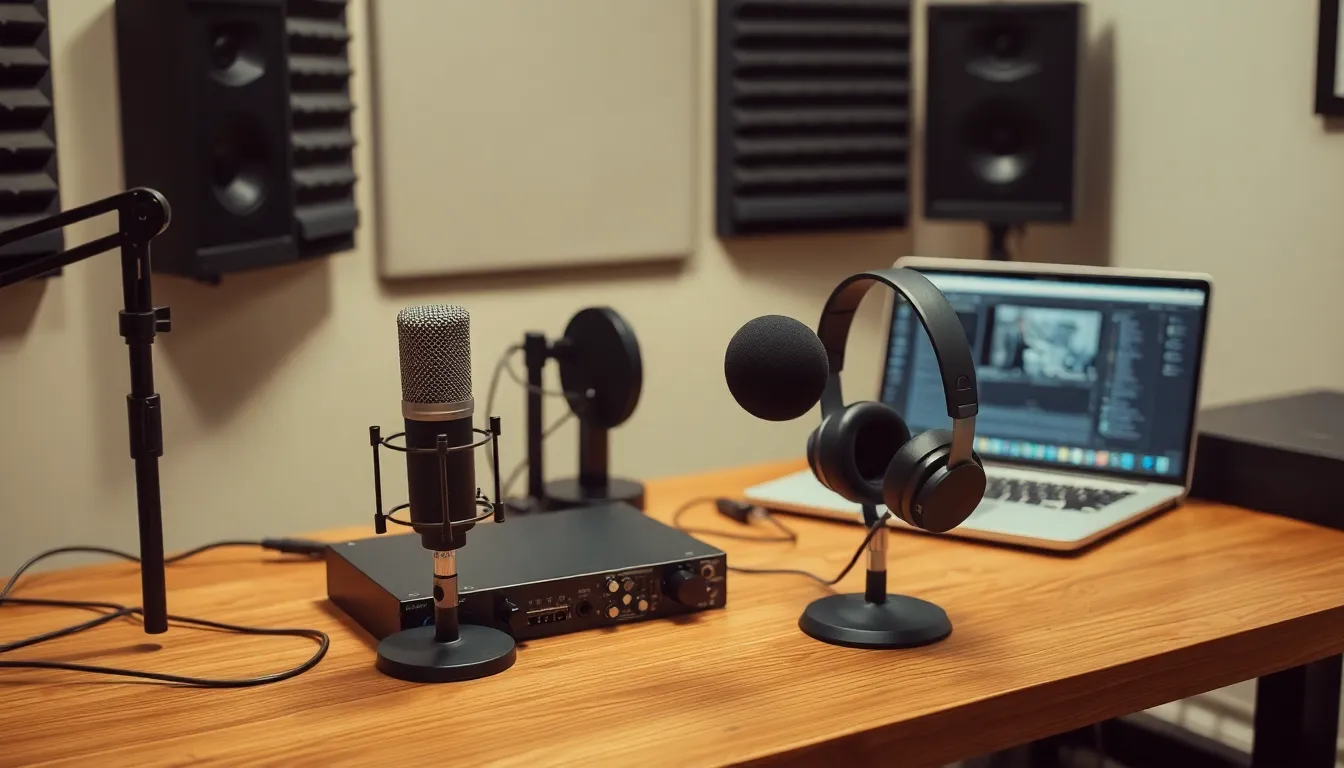
Various types of podcast recording equipment significantly impact audio quality and overall production. Understanding these essential tools helps podcasters select the right setup for their needs.
Microphones
Dynamic and condenser microphones are popular choices among podcasters. Dynamic microphones excel in noisy environments, capturing vocals with clarity while minimizing background sound. Condenser microphones, on the other hand, are ideal for studio settings, providing a broader frequency response and greater sensitivity. Investing in a quality microphone directly enhances vocal presence. Options like USB microphones offer easy connectivity, while XLR microphones require an audio interface but provide more versatility. Variations in price and quality suit beginners and professional podcasters alike.
Headphones
Monitoring audio through closed-back headphones helps eliminate external noise distractions. Accurate sound reproduction enables podcasters to assess audio levels and make real-time adjustments. Over-ear designs often provide comfort for extended listening sessions. Studio headphones are designed for frequency response accuracy, crucial during editing and mixing. Brands and models vary widely, catering to different budgets and preferences. Selecting the right headphones ensures a clearer understanding of audio quality throughout the recording process.
Audio Interfaces
Audio interfaces play a critical role in converting analog signals into digital format. Purchasing a quality interface enhances sound clarity while providing essential features like gain controls and phantom power. Many interfaces support multiple input channels, allowing for various microphone setups. USB interfaces typically offer straightforward connectivity for beginners, while advanced models may include MIDI capabilities and more input options. Investing in an audio interface greatly improves recording capabilities and overall sound integrity.
Recording Software
Recording software, often known as Digital Audio Workstations (DAWs), provides essential editing and mixing tools. Options like Audacity are free and user-friendly, making them ideal for beginners. More advanced platforms like Adobe Audition and Pro Tools offer extensive features suited for experienced podcasters. Every software typically includes functionalities such as multi-track recording, audio effects, and various export options. Choosing the right DAW aligns with specific project requirements and technical knowledge, streamlining the overall production process.
Factors to Consider When Choosing Equipment
Choosing the right podcast recording equipment involves several key factors.
Budget
Budget plays a significant role in equipment selection. Establishing a clear budget helps prioritize essential gear. Entry-level microphones range from $50 to $200, while high-quality options exceed this range. Allocating funds for audio interfaces is equally important, with prices varying from $100 to $500. Investing in quality headphones generally costs between $100 and $300. Costs for recording software can range from free options like Audacity to premium subscriptions for software like Adobe Audition. Focusing on essential equipment within budget constraints ensures podcasters get the best value.
Purpose and Style
Purpose and style of the podcast dictate the type of equipment needed. A podcast focusing on interviews may require dynamic microphones to handle varying sound levels effectively. Studio podcasts benefit from condenser microphones, which capture detailed audio for a polished sound. The style of the podcast influences recording format, leading to distinct gear choices. Live events may call for portable solutions, while studio setups can support more complex configurations. Aligning equipment with the podcast’s specific goals and style enhances overall audio quality.
Portability
Portability becomes crucial for podcasters on the move. Equipment that is lightweight and compact allows for easy transport. USB microphones provide versatile solutions for mobile recording setups. Additionally, portable audio interfaces facilitate seamless connections during travel. Choosing travel-friendly headphones ensures consistent monitoring no matter the location. Evaluating portability helps podcasters maintain flexibility while delivering quality content on various platforms.
Top Recommended Podcast Recording Equipment
Selecting the right podcast recording equipment is crucial for achieving high audio quality. Here are some top recommendations across different pricing tiers.
Entry-Level Options
USB microphones provide excellent value for beginner podcasters, with models like the Blue Yeti priced between $100 and $150. Another solid choice is the Audio-Technica ATR2100x, which combines USB and XLR connectivity, offering versatility around $80. For headphones, over-ear designs like the Audio-Technica ATH-M30x deliver good sound isolation and clarity, costing about $69. Additionally, beginners can explore software options such as Audacity, a free DAW that offers fundamental editing tools, making it ideal for newcomers.
Professional Choices
Dynamic microphones such as the Shure SM7B shine in professional settings, boasting high durability and excellent sound quality, priced around $400. For a premium alternative, the Rode NT1 condenser microphone provides stunning clarity for studio recordings, available for approximately $299. High-end headphones like the Sennheiser HD280 Pro excel in sound reproduction, usually selling for $99. Podcast creators should also consider advanced audio interfaces like the Focusrite Scarlett 2i2, priced around $199, which enhances sound quality and provides multiple input options. For editing, Adobe Audition offers advanced tools tailored for professional use, making it a popular choice among serious podcasters.
Investing in quality podcast recording equipment is crucial for anyone aiming to create engaging and professional content. The right tools not only enhance audio quality but also elevate the overall listening experience. As podcasters navigate their journey, considering factors like budget, purpose, and portability will guide them in selecting the best gear for their needs.
From entry-level USB microphones to advanced audio interfaces and professional editing software, there’s a wide range of options available. By choosing the right equipment, podcasters can ensure their voices are heard clearly, helping them connect with their audience and build a loyal listener base. Quality gear is the first step toward creating a podcast that stands out in a crowded market.