Imagine slipping on a VR headset and controlling your virtual world with nothing but your thoughts. Sounds like a sci-fi dream, right? Well, welcome to the future where mind-controlled VR isn’t just a fantasy—it’s rapidly becoming a reality. This groundbreaking technology is set to revolutionize gaming, training, and even therapy, allowing users to interact with digital environments in ways they never thought possible.
Overview of Mind-Controlled VR
Mind-controlled virtual reality (VR) represents a groundbreaking integration of technology and neuroscience. Users can navigate virtual landscapes through thought alone, eliminating the need for traditional input devices. This innovation employs brain-computer interfaces (BCIs) that interpret neural signals, allowing intuitive interactions.
Advancements in BCIs play a crucial role in this transformation. These devices monitor electrical activity in the brain, translating thoughts into actions within the virtual environment. Research indicates that as the technology progresses, it becomes more precise in interpreting complex patterns of brain activity.
Applications extend beyond gaming, impacting diverse fields like training and rehabilitation. In training scenarios, individuals can practice skills in a risk-free environment, enhancing retention and performance. Therapy also benefits; for example, VR environments designed for exposure therapy help patients confront fears in a controlled setting.
Recent studies underscore the effectiveness of mind-controlled VR in improving focus and cognitive function. By using this technology, users can increase their attention span and train their minds in engaging ways. While challenges remain, including comfort and device calibration, efforts continue to refine user experiences.
Costs associated with mind-controlled VR systems vary, often depending on the sophistication of the BCI technology used. As market demand grows, it’s likely that more affordable options will emerge, making this technology accessible to a broader audience.
Mind-controlled VR stands at the forefront of a technological revolution. It combines neuroscience and virtual reality to create immersive experiences that were once confined to fiction. As innovations in this field continue, it promises to redefine how individuals interact with digital media.
Technology Behind Mind-Controlled VR
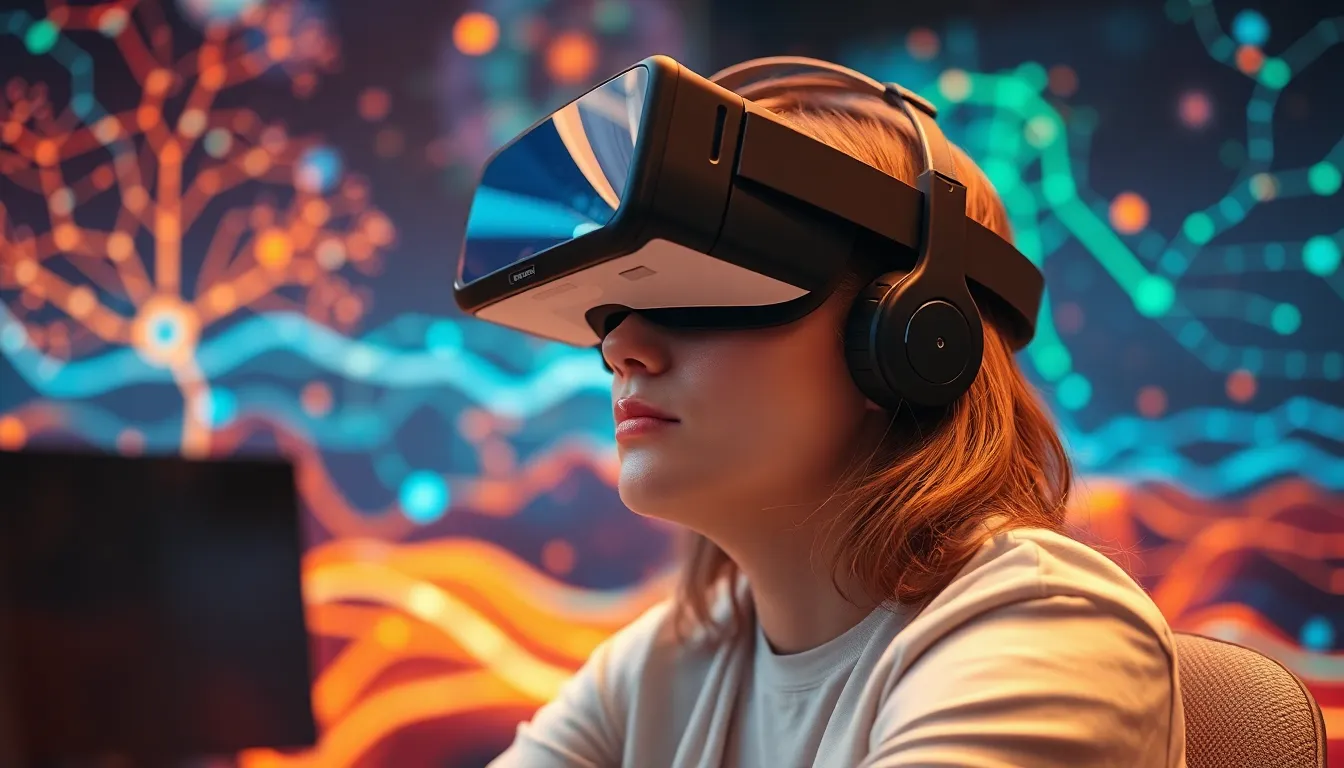
Mind-controlled VR relies heavily on innovative technologies that bridge neuroscience and virtual environments. One vital component is the brain-computer interface (BCI), which captures and interprets neural signals for seamless interaction.
Brain-Computer Interfaces
BCIs Function by detecting brain activity through sensors placed on the scalp or implanted within the brain. These devices translate neural signals into digital commands, facilitating communication between the user’s mind and the virtual world. Recent developments in BCIs have improved signal accuracy, enhancing the responsiveness of VR applications. For instance, specific EEG-based BCIs allow users to select options or navigate environments through thought alone. This shift in interaction mode transforms user experiences, making them more intuitive and immersive.
Neurofeedback Mechanisms
Neurofeedback Mechanisms play a crucial role in optimizing user engagement within mind-controlled VR. Through real-time monitoring, these systems provide users with feedback on their brain activity, helping them to control their mental state. Utilizing techniques like operant conditioning can train users to achieve desired cognitive states, which enhances focus and relaxation. Programs developed for therapeutic purposes guide individuals through various cognitive tasks, promoting improved mental health and performance. Effective use of neurofeedback in VR has shown promising results in therapy and training scenarios, contributing to the growing interest in mind-controlled technologies.
Applications of Mind-Controlled VR
Mind-controlled VR offers innovative applications across several industries. Its unique capabilities enable transformative experiences that enhance interactions and improve outcomes.
Gaming and Entertainment
Mind-controlled VR revolutionizes gaming and entertainment by allowing players to control their movements through thoughts alone. This technology enhances immersion, creating experiences that engage players at a deeper level. Users can navigate complex environments simply by focusing on specific actions, eliminating conventional controllers. Popular games have already begun integrating mind-control mechanics, resulting in a seamless and intuitive gameplay experience. Additionally, social VR platforms tap into this technology, fostering rich interactions between users that transcend traditional gaming boundaries. Enhanced enjoyment springs from the natural connection established through thought-driven interactions.
Medical and Therapeutic Uses
Mind-controlled VR significantly impacts medical and therapeutic fields by promoting rehabilitation and mental wellness. Therapists utilize this technology for exposure therapy, allowing patients to confront fears in controlled virtual environments. Users can gradually face anxieties such as heights or public speaking, leading to meaningful progress. Furthermore, mind-controlled VR assists in physical rehabilitation by enabling personalized exercise regimens that respond to user intent. Patients receive real-time feedback on their performance, fostering engagement. Studies demonstrate improved outcomes in pain management and mental health when incorporating this technology. As research advances, mind-controlled VR continues to unveil new therapeutic possibilities for practitioners and patients alike.
Benefits of Mind-Controlled VR
Mind-controlled VR offers various benefits that improve user engagement and accessibility in digital environments.
Enhanced User Experience
Mind-controlled VR drastically enhances user experience by enabling intuitive navigation. Users interact with virtual worlds seamlessly, utilizing thoughts instead of traditional controllers. Virtual environments become more immersive as players engage directly with their mental states. Increased focus leads to better performance in gaming scenarios. Additionally, instant feedback from the system creates a more engaging atmosphere, fostering greater emotional connection with experiences.
Accessibility for Individuals with Disabilities
Mind-controlled VR improves accessibility for individuals with disabilities significantly. Users unable to use standard controllers can participate in virtual activities effortlessly. This technology opens doors for those with mobility challenges, providing engaging and interactive experiences. Cognitive disabilities also benefit from mind-controlled systems, allowing individuals to express creativity and enjoy entertainment options. The implementation of BCIs ensures inclusivity, making these virtual environments accessible to a broader audience, thus transforming leisure and therapeutic applications in essential ways.
Challenges and Limitations
Mind-controlled VR faces several challenges that hinder its widespread adoption.
Technical Hurdles
Technical challenges present significant obstacles in implementing mind-controlled VR effectively. Signal noise from brain activity can interfere with the accuracy of brain-computer interfaces (BCIs), complicating their ability to interpret neural signals reliably. Additionally, calibration of devices requires considerable time and effort, often limiting user convenience. Users might experience discomfort from prolonged usage, which can impact their overall experience. Limited access to high-quality hardware affects the consistency of data acquisition. Solutions must address these hurdles to enhance user experience and broaden applications in various fields, including gaming and therapy.
Ethical Considerations
Ethical issues arise in the realm of mind-controlled VR that warrant careful attention. Privacy concerns come into play, as brain data could potentially be exploited or misused. Users may not fully understand the implications of sharing their neural information, raising questions about consent and security. Furthermore, potential psychological impacts emerge, including the risk of altered perceptions of reality and dependency on technology. Society must navigate these ethical dilemmas to ensure responsible development and application of mind-controlled VR, balancing innovation with user safety and autonomy.
Mind-controlled VR is set to revolutionize the way users engage with digital environments. By harnessing the power of brain-computer interfaces, this technology offers intuitive interactions that enhance user experience across various fields. From gaming to therapy, the potential applications are vast and transformative.
As advancements continue, the accessibility of mind-controlled VR will likely increase, allowing a broader audience to benefit from its capabilities. However, it’s essential to address the technical and ethical challenges that accompany this innovation. Navigating these issues responsibly will ensure that mind-controlled VR develops in a way that prioritizes user safety and inclusivity. The future of interaction with virtual worlds is here, and it’s driven by the mind.