In a world where binge-watching is practically a sport and podcasts are the new bedtime stories, audio video technology has become the unsung hero of our daily lives. From the crystal-clear sound of your favorite tunes to the breathtaking visuals of the latest blockbuster, this tech isn’t just about entertainment; it’s about transforming how we experience everything around us.
Imagine a life where every meeting feels like a Hollywood production and every family gathering is a front-row seat to a concert. With the right audio video setup, that dream can be a reality. Dive into the fascinating world of audio video technology, where innovation meets creativity, and discover how it can elevate your everyday experiences to cinematic heights.
Overview of Audio Video Technology
Audio video technology encompasses the various tools and systems that enable the capture, transmission, and playback of sound and visual content. This technology plays a vital role in modern communication, making interactions more dynamic and engaging. Devices like smartphones, tablets, and smart TVs have integrated audio video capabilities, allowing access to high-definition content anytime and anywhere.
Streaming platforms leverage audio video technology to deliver films, series, and live events, creating rich, immersive experiences. Quality audio significantly enhances visual content, transforming standard presentations into multi-sensory events that captivate audiences. Conferencing systems utilize advanced audio video technology to facilitate seamless remote communication, bridging distances with clarity and precision.
In education, audio video tools foster interactive learning environments. Students engage with visual presentations and audio narrations, which help solidify understanding and retention of information. Additionally, the integration of virtual reality and augmented reality into audio video systems is revolutionizing entertainment and training, providing users with interactive and immersive experiences.
Industry professionals frequently seek cutting-edge audio video technology to optimize sound and image quality. Innovations such as 4K resolution and spatial audio create stunning visuals and immersive soundscapes. These advancements not only enhance viewer satisfaction but also drive the demand for higher-quality equipment in both personal and professional settings.
Overall, audio video technology significantly influences how individuals consume content and interact. Its capabilities continue to evolve, pushing the boundaries of creativity and engagement in various fields, from entertainment to education and business.
Key Components of Audio Video Technology

Audio video technology comprises various essential components that enable seamless integration of sound and visuals. Understanding these elements is crucial for optimizing user experiences across different settings.
Audio Equipment
Microphones capture sound effectively, translating voice and ambient noise into digital signals. Speakers play back audio, delivering high-fidelity sound suitable for various environments. Audio interfaces facilitate connection between microphones and computers, ensuring quality recordings. Mixing consoles allow for real-time adjustments, providing control over volume and effects during live events or recordings. Headphones maintain sound quality in personal listening experiences, isolating the user from external noise. All these audio components work together to enhance communication and entertainment.
Video Equipment
Cameras serve as a primary tool for capturing visual content, ranging from professional-grade models to user-friendly options. Video display devices, including monitors and projectors, project content clearly, accommodating different venues. Video switchers select among multiple feed inputs, enriching live broadcasts with dynamic viewing options. Capture cards transfer video streams to computers for editing or live streaming, making them indispensable in content creation. Lighting equipment ensures optimal visibility, enhancing the overall image quality during production. Each video component contributes to creating immersive visual experiences.
Applications of Audio Video Technology
Audio video technology finds diverse applications in everyday life, significantly enhancing entertainment and work environments.
Home Entertainment
Home entertainment systems benefit greatly from audio video technology. Individuals create cinematic experiences using high-definition televisions, surround sound systems, and streaming services. Components like projectors and soundbars elevate movie nights. Smart devices enable seamless integration, allowing users to control everything from one application. Families connect through shared viewing experiences, enjoying concert streams and live events from the comfort of home. Regular advancements in resolution and sound quality continually redefine these experiences, making them more immersive.
Professional Settings
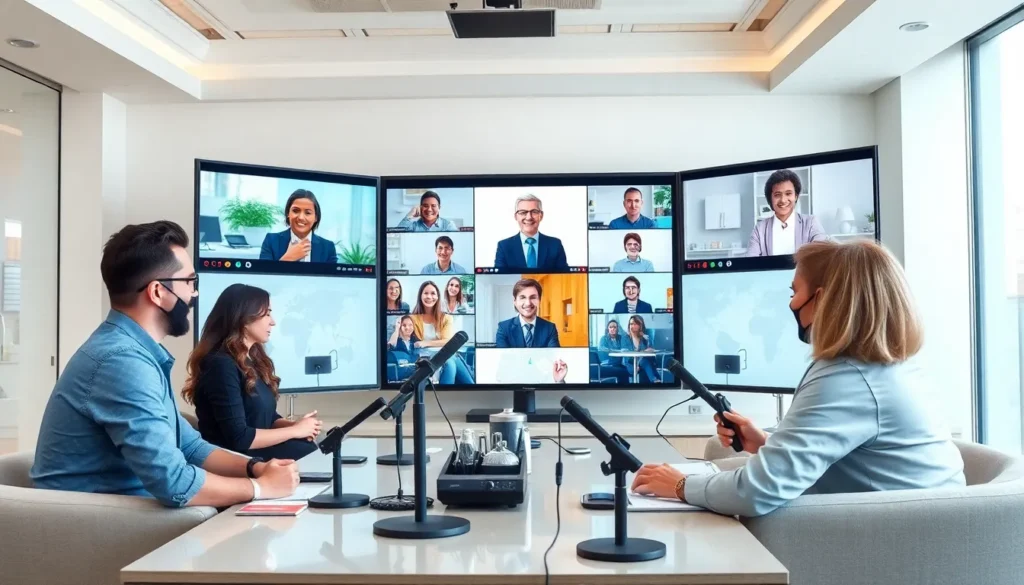
Audio video technology plays a crucial role in professional settings. Businesses use this technology for video conferencing, enhancing remote collaboration and reducing travel expenses. Conference rooms equipped with displays, microphones, and cameras facilitate productive meetings. Interactive whiteboards and digital presentation tools engage participants more effectively. Event organizers leverage this technology for webinars and corporate training sessions, expanding reach and audience engagement. Integration of high-quality audio and visual elements fosters clearer communication and enhances professional presentations.
Emerging Trends in Audio Video Technology
Audio video technology continues to evolve, significantly influencing how content is created and consumed. Innovations drive this sector, promoting more engaging experiences.
Streaming Services
Streaming services remain paramount in audio video technology’s evolution. Platforms like Netflix, Hulu, and Disney+ offer high-definition content on demand. These services adopt advanced compression techniques, ensuring optimal visual quality with lower bandwidth usage. Users enjoy seamless playback across devices, enhancing convenience. Major streaming providers increasingly incorporate interactive features, allowing viewers to engage with content in new ways. Personalization algorithms deliver tailored recommendations, creating a more personalized viewing experience.
Virtual Reality Integration
Virtual reality (VR) integration transforms audio video experiences, immersing users in digital environments. Companies develop VR headsets designed for gaming and entertainment, providing lifelike audio and visuals. Users explore 360-degree content, enhancing engagement and interaction. Educational institutions utilize VR for experiential learning, offering simulations of real-world scenarios. Collaborations with content creators expand the diversity of available VR experiences. Enhanced audio technology complements VR, creating spatial soundscapes that increase immersion. As VR continues to advance, it shapes the future of entertainment and education.
Audio video technology is reshaping the way people engage with content and each other. Its ability to create immersive experiences is transforming everyday moments into memorable events. As advancements continue to emerge in this field the potential for innovation seems limitless.
From enhancing home entertainment to improving professional communication the impact of audio video technology is profound. With each new development users can expect richer experiences that blend sound and visuals seamlessly. This technology not only elevates personal enjoyment but also fosters deeper connections in both social and professional settings.
As individuals embrace these advancements they’ll find new ways to explore creativity and interaction, ensuring that the future of audio video technology remains bright and full of possibilities.