Virtual reality isn’t just for gamers anymore; it’s a playground for creativity and innovation. Imagine crafting immersive worlds where users can explore, learn, and even escape from reality—without the risk of stepping on a Lego. Developing VR content opens doors to limitless possibilities, whether it’s creating educational experiences, virtual tours, or mind-bending games that keep players on their toes.
Understanding VR Content
Virtual reality (VR) content encompasses experiences that immerse users in 3D environments. These experiences transport users beyond physical limitations, facilitating exploration, learning, and engagement.
What Is VR Content?
VR content includes any digital material created for virtual environments, such as simulations, games, and training modules. Various formats exist—360-degree video, interactive experiences, and gaming applications. Users interact with this content using VR headsets and controllers, enhancing their sensory engagement. Developers strive to create experiences that evoke emotion and connection, leading to a more meaningful interaction with the digital world.
Importance of VR Content Development
VR content development significantly impacts industries such as education, entertainment, and healthcare. Immersive experiences promote better retention of information, making learning more effective. Engaging simulations allow users to practice real-world skills safely, reducing risks and enhancing preparedness. Additionally, VR in entertainment offers unique storytelling that captivates audiences like never before. Developers who prioritize quality VR content contribute to the technology’s growth and usability across diverse sectors.
Key Steps in Developing VR Content
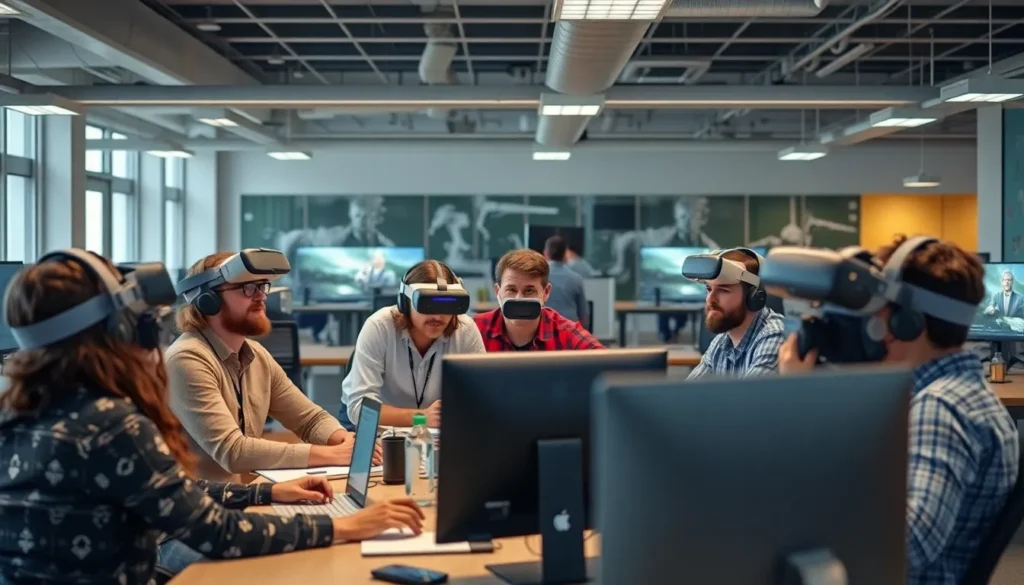
Developing VR content involves several crucial steps that enhance user engagement and experience. Focusing on each stage ensures that the final product meets user needs and expectations.
Conceptualizing Ideas
Generating ideas starts with identifying the target audience and their specific interests. Developers gather input from potential users to create compelling concepts that resonate. Researching existing VR content uncovers gaps in the market and sparks innovative ideas for new experiences. Gathering inspiration from various fields can lead to creative approaches. Brainstorming sessions allow team members to explore different possibilities, fostering collaboration. Ultimately, refining these ideas into a clear vision sets the foundation for the entire development process.
Designing User Experiences
Creating an effective user experience requires attention to detail and understanding user behavior. Integrating intuitive navigation allows users to explore seamlessly. Crafting interactive elements enhances engagement, making the experience more immersive. Visual aesthetics play a vital role; employ high-quality graphics to attract and retain attention. Testing prototypes with real users provides valuable feedback for improvements. Iterative design fosters continuous enhancement of the user experience. Incorporating accessibility features ensures that everyone can enjoy the content, widening the audience reach.
Choosing the Right Technology
Selecting the appropriate technology directly impacts the development process and final product quality. Assess different VR platforms based on compatibility and user preferences. Evaluating hardware requirements ensures the content runs smoothly across devices. Opting for development tools and software suites suited for VR simplifies the creation process. Additionally, staying updated with emerging technologies helps developers leverage innovations effectively. Balancing performance and user experience will yield a successful VR application. Involvement with a strong community of developers provides ongoing insights and support throughout the technology selection process.
Tools and Platforms for VR Development
Various tools and platforms empower developers in VR content creation. These resources enable the production of immersive experiences that engage users.
Popular VR Development Tools
Unity and Unreal Engine rank among the most popular VR development tools. Unity offers a flexible environment suitable for developers of all skill levels. Unreal Engine, known for its photorealistic graphics, attracts those seeking high-quality visuals. Other notable tools include A-Frame for web-based VR and Blender for creating 3D models. Each tool provides unique features, catering to diverse project requirements.
Comparison of VR Platforms
Multiple VR platforms exist, varying in capabilities and target audiences. Oculus Quest stands out for its standalone nature, providing ease of access. HTC Vive excels in high-performance capabilities with room-scale tracking. PlayStation VR integrates seamlessly with the gaming console, appealing to a broad audience. Microsoft HoloLens focuses on mixed reality, enhancing applications in industries like healthcare and education. Each platform presents distinct advantages and limitations, guiding developers in choosing the right fit for their projects.
Challenges in Developing VR Content
Developing VR content involves various challenges that can hinder creativity and functionality. These obstacles require careful consideration to create effective, immersive experiences.
Technical Limitations
Technical shortcomings can significantly impact VR development. Hardware constraints affect rendering capabilities and frame rates, which are crucial for seamless experiences. Limited processing power may result in lag or poor visual quality, leading to user dissatisfaction. Software compatibility issues also arise, complicating development efforts. Ensuring that content functions across multiple platforms demands additional resources and time. Mobile VR devices often present restrictions compared to high-performance setups, necessitating a balance between quality and accessibility.
Budget Considerations
Financial aspects play a vital role in VR content development. Developing high-quality VR experiences often requires substantial investments in both software and hardware. Costs associated with expert personnel can escalate budgets quickly. Additionally, licensing fees for software tools may burden developers, impacting project viability. Allocating resources for testing and iteration adds further expenses. Developers must prioritize features based on budget constraints, which can limit creativity and overall project scope.
User Accessibility
User accessibility presents critical challenges in VR content creation. Many users face barriers due to expensive hardware or software requirements. Developers often overlook inclusivity, resulting in limited experiences for diverse audiences. Creating content that accommodates various user abilities requires additional design considerations. Moreover, providing comfortable experiences to prevent motion sickness is essential. Ensuring a wide range of interaction methods enhances engagement for all users. Prioritizing accessibility ultimately broadens the audience and improves overall user satisfaction.
Future Trends in VR Content Development
Emerging trends in VR content development shape the future landscape of immersive experiences. Innovations continue to redefine how users interact with virtual environments.
Innovations on the Horizon
Advancements in haptic feedback technologies enhance user immersion significantly. Users can feel sensations and vibrations, heightening realism in virtual settings. AI integration also plays a crucial role, personalizing experiences based on user behavior and preferences. Cloud-based VR platforms are gaining traction, allowing for expansive multiplayer environments without heavy hardware requirements. Enhanced graphics engines promise even more photorealistic visuals, captivating audiences in ways not seen before.
Potential Impact on Industries
VR content has transformative potential across various sectors. In education, it revolutionizes training methods, enabling interactive learning experiences that improve retention. Healthcare benefits from VR simulations that prepare professionals for real-life scenarios. Retailers leverage virtual showrooms, letting customers explore products in an engaging manner. Entertainment evolves as VR enables immersive storytelling, drawing audiences deeper into narratives. Each industry stands to gain from tailored VR applications, paving the way for widespread adoption and innovative approaches to traditional practices.
The future of VR content development is bright and full of potential. As technology continues to evolve developers have an incredible opportunity to create experiences that captivate and engage users across various industries. By focusing on high-quality content and innovative design they can overcome challenges and push the boundaries of what’s possible in virtual reality.
With advancements in tools and platforms developers are better equipped than ever to bring their creative visions to life. Embracing emerging trends like AI integration and cloud-based solutions will further enhance user experiences. As VR becomes more accessible the impact on education healthcare and entertainment will be profound transforming how people learn interact and enjoy immersive storytelling.